

Wildzone
Wildzones are regions of permanent extreme Aether saturation, where the environment has accumulated enough power to develop stable magical behavior of its own. The land, sea, and life within them have been altered across generations.
Enchanted Forest
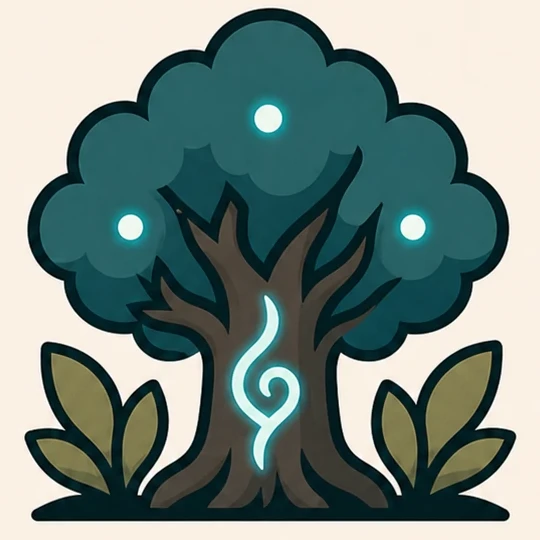
Enchanted forests are Vitae-dominant wildzones whose ecosystems have become partially awakened, capable of reacting to its environment as though participating in a shared Nature Ritual across the entire domain. The vegetation, wildlife, and ambient magic have become unusually coordinated, alert, and responsive.
The first sign of an enchanted forest is usually not spectacle, but behavior. The forest reacts. Leaves turn at the approach of strangers, scents shift with mood and danger, wildlife grows quiet or watchful in unison, and pathways seem to become more or less hospitable based on the forest's intent toward those passing through. In stronger forests, this behavior becomes unmistakable. Roots may move beneath the soil, blossoms may open only for favored visitors, and entire glades can feel protective, judgmental, or strangely ceremonial.
Enchanted Forests are among the world's most important sources of magical flora, awakened beasts, and alchemical ingredients. Magical Gardens are usually established within or beside them, where Druids can work with the living intelligence of the environment rather than against it. Elven settlements, Feygrove tribes, and Druid Circles often form long-standing relationships with these forests, treating them as sacred territories, partners in defense, and major economic assets. Even so, no enchanted forest is ever fully domesticated. The most cooperative forests still retain a willful character that can become dangerous when disrespected, neglected, or pressured by corruption. Druidic tending can greatly accelerate a forest's awakening, and many of the oldest Enchanted Forests were nurtured for generations by Druid Circles. Left unchecked, nature can make places too willful and fey-touched for ordinary habitation.
Sleeping Grove
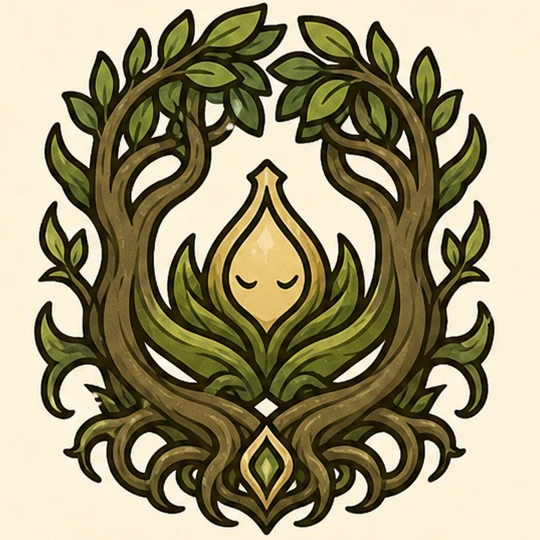
It is common for enchanted forests to possess sleeping groves, a resting place of Dryads. These groves act as key anchors of the forest, vehemently protected by Elven colonies. Logging, excavation, and military movement near them will provoke direct hostility from Elves, Dryad colonies, and the forest itself.

Enchanted Reef
Enchanted Reefs are Aqua-Vitae wildzones formed in vast coral reefs whose environment, marine life, and ambient Aether have fused into a stable magical ecology. They are the aquatic counterpart to enchanted forests, capable of influencing its own environment through various forms of aquatic magic. It has a more fluid, architectural, and territorial character shaped by current, pressure, sound, and depth.
The environment of an enchanted reef is brimming with vast, living coral structures, marine life, and aquatic fey that live in relative harmony with the Merfolk colonies. They are often visibly alive in ways even ordinary reefs are not. Coral structures may pulse faintly with light in response to sound or movement. Currents organize themselves into reliable lanes, eddies, and barriers suited to those who inhabit it. Sound carries strangely through the water, sometimes farther than sight, and whole districts of reef can feel calm, ceremonial, predatory, or defensive depending on their function.
Enchanted reefs are fundamental to Merfolk settlement, Seamage practice, and underwater alchemical cultivation. Many Merfolk communities build within reef walls, coral caverns, and current networks rather than merely near them, allowing the reef to function as habitat, fortification, farmland, and transportation system at once. Reef-grown materials support medicine, dyes, toxins, rare foods, and specialized Water Aethertech, while the reefs themselves provide natural warning systems and strategic defenses against predators, raiders, and demonic threats from the sea.
Reef Walls and Jetlanes
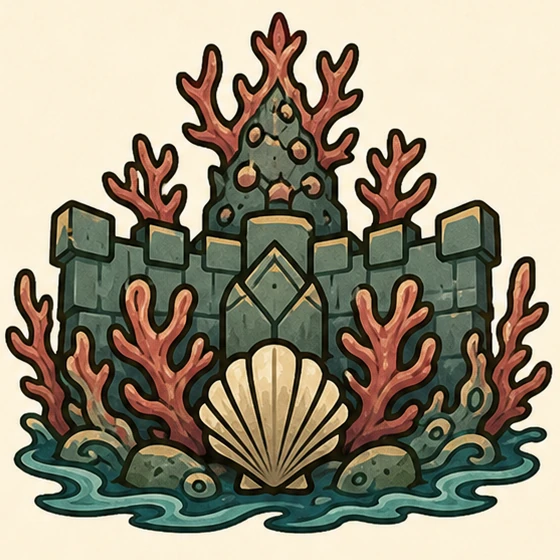
Reef Walls are dense living fortifications of coral, stone, and marine growth that provide shelter, define territory, and support large underwater settlements. Jetlanes are stable streams or tunnels of accelerated water used for travel, trade, migration, and defense. In major reef territories, these lanes are often cultivated and maintained much like roads or canals, especially by Merfolk Sorcerers with strong magical or civic control over the area.
Reefspire
Reefspires are enormous coral towers that grow within Enchanted Reefs over many centuries. The largest rise from the seafloor nearly to the surface, and their hollows and terraces serve as civic landmarks, homes, temples, and watchpoints. Like the elder trees of an Enchanted Forest, Reefspires anchor the reef around them, and harming one can provoke the reef itself.
Greatkelp
Greatkelp are ancient, enchanted kelp organisms that grow like underwater trees, forming vast interconnected forests. Their holdfasts anchor around stone like roots, their stalks thicken into flexible, trunk-like columns, and their upper fronds spread into glowing canopies. Greatkelp thrive in cold, sunlit coastal waters, while Reefspires belong to warmer seas, so Merfolk colonies along colder coasts are typically built among kelp forests rather than reefs.
Shadowland
Shadowlands are Miasmic wildzones created where the veil between Gaia and the Nether has been thinned, scarred, or torn badly enough for demonic energies to infiltrate the world. Unlike enchanted forests and enchanted reefs, which arise from accumulations of life-aligned Aether, Shadowlands are invasive and parasitic. They infect the surrounding environment, teaching the land to obey the logic of the Nether.
Light dims as though smothered by pollution. The air feels wrong even when no visible haze is present. Animals may mutate into Chimerans under sustained exposure or during strong surges, while ordinary vegetation develops channels of Genesis Miasma and gives way to forms adapted to demonic influence. As Miasma accumulates, demonic pods, Genesis growths, calcified matter, and other signs of corruption begin to appear. Demons and Chimerans thrive in these conditions, and even minor demonic populations can slowly deepen or expand a Shadowland if left unchecked.
Shadowlands are not static. They spread when Miasma pressure rises, especially around unchecked demons, repeated violence, failed purifications, or active rifts in the veil. They can also recede, but only through sustained pressure, cleansing, containment, and the elimination of the demonic forces feeding them. Combating the spread of Shadowlands is one of the Adventurer's Guild's most important functions, and many of Endros's major defensive works exist primarily to monitor, contain, and roll back such territories. During Blood Hunts and major Miasma Storms, Shadowlands become markedly more dangerous, deepening in saturation as demonic behavior grows more aggressive and corruption takes root more quickly in land, body, and infrastructure.
Some Shadowlands remain relatively shallow, producing dimmed terrain, increased demonic activity, and periodic corruption. Others become Deep Shadowlands, where the environment is so saturated with Miasma that demonic presence can organize itself with alarming efficiency. These deeper territories are among the most strategically dangerous environments in the world, and if allowed to persist too long may become staging grounds for larger demonic operations.
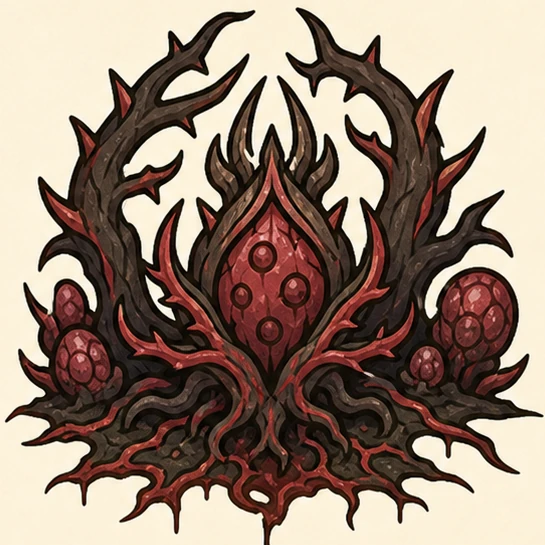
Bloodgrove
Some Shadowlands develop unusually strong influences of Genesis Miasma, especially in forests, wetlands, and other regions where life was already dense before corruption took hold. These territories are defined by hostile overgrowth. Vegetation remains vigorous, invasive, and unnaturally productive, creating living demonic ecologies.
Bloodgroves are among the most strategically valuable demonic territories. They can produce shadowland plants, demon fruits, pod-bearing growths, and other biological resources that support demonic expansion. More importantly, they behave as a twisted counterpart to enchanted forests, capable of participating in their own form of domain-wide magic. Creepers are particularly associated with these regions, where they establish territorial domains and cultivate a standing field of hostile natural behavior through their influence over Seedlings, growth patterns, and lesser servants. Within such territories, roots, spores, growths, and Chimeran behavior may all react in concert, allowing the domain to sense intrusion, accelerate corruption, close pathways, and support ambushes as though the whole biome were acting with a shared predatory instinct.
The behavior of a Bloodgrove is less like harmony and more like conspiracy. Where enchanted forests guide allies, Bloodgroves herd prey. Where healthy wildzones warn, shelter, and coordinate through mutual recognition, these domains coordinate through appetite, panic response, and invasive adaptation. Trails may close behind intruders within minutes, spore releases may trigger fear, exhaustion, or aggression in waves, and bloodshed can cause nearby pods and growths to ripen with unnatural speed. Chimerans often react to disturbances with unnerving coordination, responding to root pulses, scent shifts, and ambient Miasmic cues as though they were parts of a distributed nervous system.
These territories blur the line between demonic ecosystems, cultivated war-farm, and corrupted Wildzone. Whole patches of vegetation may be repurposed into concealment, barriers, or living traps, while injured demonic fauna are drawn toward regenerative growths that rapidly seal flesh and calcify tissue. Seedlings may emerge from seemingly inert roots or dead stumps once enough motion, heat, or blood is sensed nearby. As a result, Bloodgroves are especially difficult to purge without extensive fire, druidic countermeasures, or the death of the entities anchoring the growth.