


Aether Storm
Aether Storms are temporary upheavals in Aether saturation, where one or more Aether types surge through an area in unstable fronts, pulses, and waves. The rapid rise, lulls, and oscillation in ambient Aether causes visible anomalies, and disrupt the ordinary balance of a region.
Because sorcery, rituals, alchemy, and Aethertech all depend so heavily on environmental conditions, local rules of magic may temporarily shift. Spells aligned with the storm's Aether become easier, stronger, and more efficient, while unrelated magic may become less stable or less practical. The strongest storms can briefly push an area near the threshold of extreme saturation, producing effects similar to a short-lived Wildzone without leaving behind a permanent one.
Most storms can be recognized before their full effects arrive. Animals, Fey, magical plants, and sensitive sorcerers often react first. Light, sound, smell, temperature, and feeling frequently behave in ways that feel subtly wrong.
The aftermath of a storm can be nearly as important as the event itself. Lingering saturation may result in rare alchemical materials, newly awakened flora and fauna, blessed ground, corrupted land, or briefly activated ritual sites.

Sol Storm
Sol Storms are surges of heat, radiance, and aggressive combustion. They are strongest in dry, exposed terrain such as eastern Endros, where harsh sunlight and sparse vegetation allow Sol saturation to rise quickly. Their effects weaken when they move into lush or heavily shaded regions, and they only appear during the summer season. Even then, most Sol Storms are relatively mild, while truly notable events may occur only once in a decade.
The sky during a Sol Storm often takes on an amber, crimson, or white-gold cast even through cloud cover. Shadows become unnaturally sharp, heat shimmer hangs in open air, and sparks or embers may drift without any obvious fuel. Metal and stone hold warmth unnaturally well, as though the storm has soaked itself into the environment. Pyromancy becomes easier and more efficient, and industries that rely on heat such as smithing, kilnwork, and glasswork may see dramatic improvements in output and quality. Certain forms of alchemy are only possible during these times.
The danger is just as significant. Wildfires become far more likely, exposed travelers can quickly suffer heat exhaustion, and Fire Aethertech can become unstable if pushed too hard.

Vitae Storm
Vitae Storms are deeply important to the ecological character of Endros, as they blur the line between weather, ecology, ritual, and awakening. Mild, localized Vitae Storms may occur a few times each year, while truly notable storms are rare, affecting much larger regions and appearing only once in a decade or so.
A Vitae Storm often feels less like a disaster and more like the land itself becoming too alive. Vegetation bends toward the advancing front, roots shift beneath the soil, flowers bloom overnight, and scents thicken in the air. Wildlife may become unusually bold, synchronized, or watchful, while the landscape itself can feel attentive in a way that is difficult to mistake. Enchanted forests strengthen dramatically during these events, magical gardens enter periods of peak productivity, and rare alchemical plants may bloom only during or immediately after a storm. Fey awakenings, evolutions, and unusual births are also more common under heavy Vitae saturation.
For Druids, these storms are extraordinary windows of opportunity. Growth, healing, grafting, habitat shaping, and large-scale ritual work become far more powerful. The same vitality, however, can make settled land difficult to manage. Forest paths shift, roots and brush overrun neglected borders, and awakened vegetation may become hostile to perceived intruders.

Aqua Storm
Aqua Storms are saturation events of flow, cold, mist, pressure, frost, and current. They are not merely rainstorms, though they may produce intense rain, sleet, snow, or fog. Underwater variants are widespread enough for many regions to experience them two or three times a year, while land variants are much rarer and may occur only once or twice in a decade. They can appear during any season, but are most common during winter.
Their arrival is marked by condensation forming across nearly every surface, dry materials beginning to sweat with moisture, and mist banks gathering into lanes, walls, or drifting masses. Rivers, tides, and underground channels grow louder and more forceful, while seasonal expectations may break down as snow, hail, or cold rain appear out of place. Underwater currents can shift strongly during these storms, though usually in a slower and more manageable way than the violence seen in true sea tempests.
Water sorcery and many forms of alchemy become more available and more flexible during an Aqua Storm. Merfolk transportation networks and Water Aethertech may perform exceptionally well while the storm is stable, sometimes opening brief windows of extraordinary speed or efficiency. The disruption is broader than it is chaotic. Sea travel becomes less predictable, large bodies of water become more dangerous to cross, and Water Aethertech that is overperforming under one surge may fail abruptly when the next shift passes through. Aqua Storms also tend to heighten emotion in waves, often leaving people feeling overwhelmed in bursts but able to recover from that intensity just as quickly.
Nim Storm
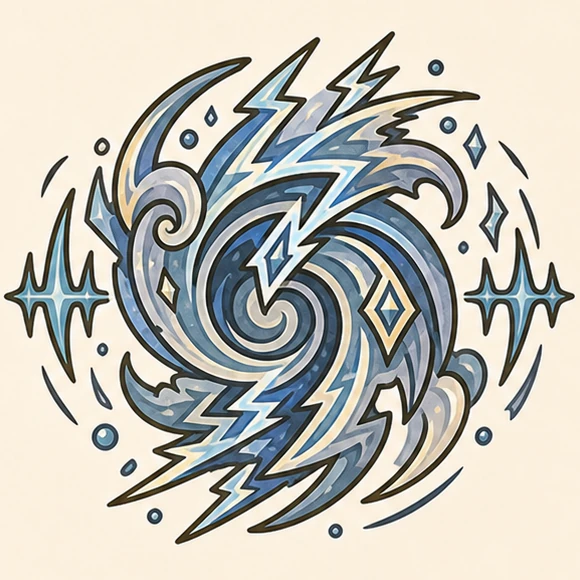
Nim Storms are the most conventionally storm-like of the major Aether Storms, though still unmistakably magical in character. They appear most often during transitionary seasons when winds are strongest, and they primarily affect mountain regions, high-elevation colonies, and other exposed environments. Most last only a few hours, though remnant conditions can linger for several more.
Before the full strength of the storm arrives, the air may whistle, hum, and carry distant voices. Hair, fabric, ash, leaves, and loose debris begin to drift before the gale itself fully strikes. Sound tends to travel farther than usual, creating a strange excess of noise that intrudes all at once. At stronger levels, the storm may produce visible Aether crackling that resembles lightning.
Nim Storms are a boon to flight, gliding, jumping, and projectile guidance. Airships and skilled fliers can achieve remarkable speed in them when the storm is properly understood, and certain forms of infrastructure such as vent systems, cooling systems, and other Air Aethertech may function with unusual efficiency. Stormcrest and other elevated settlements naturally place great importance on reading these conditions. The danger lies in turbulence. The same storm that empowers an expert may ground an ordinary flier, tear at exposed structures, and create deadly wind corridors, aerial dead zones, and sudden updraft traps shaped by local terrain.

Prana Storm
Prana Storms are distinct from the elemental storms in that they are social, emotional, and spiritual as much as they are environmental. Of all major storm types, they are the most predictable, often occurring much like a broad summer heartbeat that washes across Endros. Their effects are strongest in populated cities, major temples, sacred sites, and regions with notable Prana saturation or convergent leylines.
The atmosphere during a Prana Storm feels lighter, calmer, and easier to breathe. Light may take on a soft pearlescent or golden quality, sleep becomes deeper and more restorative, and sanctified spaces seem to shine with unusual warmth and reassurance. Crowds often become more cooperative, hopeful, charitable, and emotionally steady. Healing, blessing, and other holy magic becomes easier, allowing priests to perform miracles more reliably. These storms make ideal times for festivals, memorials, large rites, and offensives against demonic forces. Shadowlands may recede at their edges, and demonic influence is often measurably suppressed.
Prana Storms are widely regarded as periods of renewal, civic cohesion, demon hunting, and unusual spiritual clarity. When a surge leans strongly into Sacra, buried guilt, confession, zeal, and emotional intensity can surface with surprising force. Those aligned with Miasma may feel physically or mentally strained under the pressure.
Geo Storm
Geo Storms are among the least predictable of all storm types. Only sixty are recorded to have occurred in the last thousand years, and were only experienced underground in Dwarven colonies. The initial burst that produces the greatest disruption is often brief, sometimes lasting only a few minutes, but its remnant effects can linger for days.
Their approach is usually announced by low tremors and a sense of tension in the earth itself. Stone and metal may begin to ring with internal resonance. Dust lifts and settles into geometric patterns, similar to the patterns produced by sound waves. Crystals can grow rapidly through cracks, cavern walls, and foundries, and the deeper layers of the world may feel unusually awake. Earth sorcery and earth rituals become markedly more productive under these conditions, and Dwarven artificers may cultivate rare crystals or specialized materials that cannot be produced under ordinary saturation. Hidden veins, chambers, buried structures, and faults may also become easier to detect, while Golems and Geo Aethertech can behave with unusual responsiveness.
The hazards are severe. Cave-ins, landslides, subsidence, magnetic anomalies, and failures in lifts, rails, and other earth-based machinery are all common concerns. Geo Storms may also disturb deeper regions such as the Feyweave, leading to awakenings, breaches, or other subterranean complications that are difficult to contain once they begin.
Miasma Storm
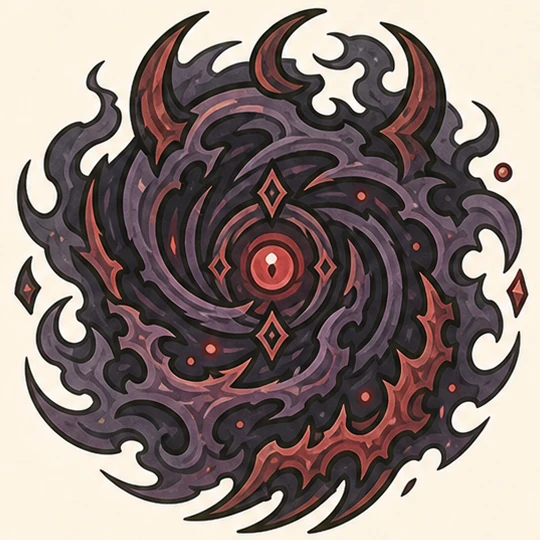
Miasma Storms are the most feared and strategically important storms in Endros. Powerful variants trigger Blood Hunt conditions across an entire region, threatening society with intense demonic attacks. Localized Miasma Storms occur with some regularity inside Shadowlands, especially Deep Shadowlands, while truly powerful and widespread storms occur only once every year or two. They are difficult to predict far in advance, though Fairies are often able to sense their approach in the short term.
Their appearance is unmistakable. Light dims or feels smothered even at midday, a crawling black haze may spread with the advancing front, and animals often panic, fall silent, or flee before the worst conditions arrive. Those who are especially susceptible may become angry, paranoid, numb, exhausted, or predatory depending on the form the storm takes and the vulnerabilities already present in them.
Most of Gaia already lies under demonic control, amplifying its benefits for the demonic populations. Though they are less effective within Endros, it is under constant pressure from the surrounding world. Miasma fronts can push inward, causing sudden flares of corruption and periods where demonic influence rises sharply across otherwise stable land. During a Miasma Storm, demons become more aggressive, more active, and more dangerous. Shadowlands deepen or spread, corruption takes root more quickly in land and body alike, and Miasma rituals or demontech become far more effective.
Border forts, exorcists, and Adventurer's Guild forces treat major storms as crisis conditions requiring immediate mobilization. All Adventurers are required to participate during these storms, without exception. Failure to do so may result in immediate expulsion from the Guild.